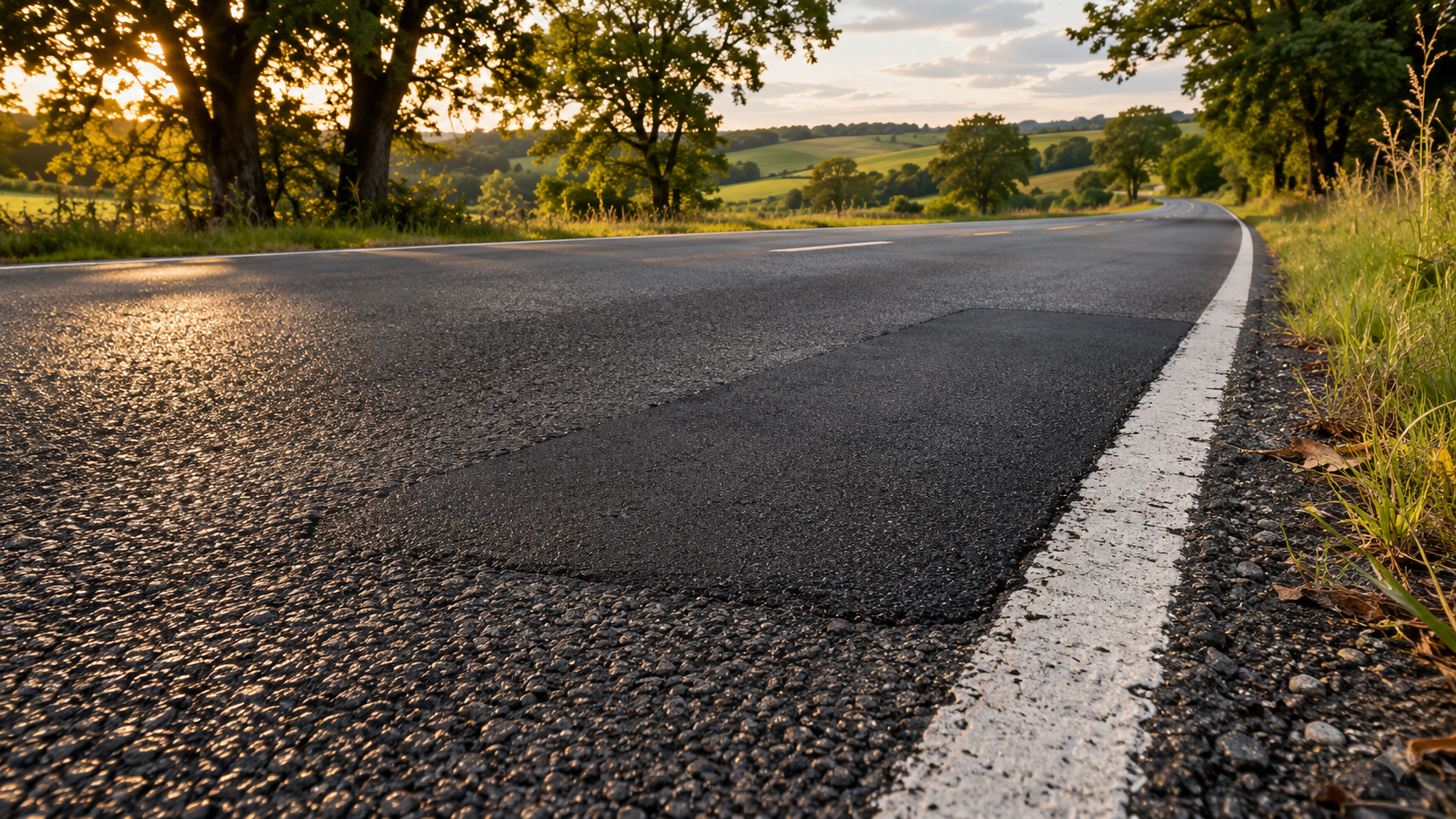
Road surfaces can change the sound and feel of a journey. Texture, repairs, drainage, and wear make one stretch of pavement different from the next.
The surface is part of what you feel
A journey can change character when the pavement changes. You may notice a different sound, a new rhythm over joints, or a patch that feels unlike the surrounding road. Those observations are part of the driving experience, but they do not diagnose the pavement's condition on their own.
Avoid assuming that the quietest-looking or newest-looking stretch must offer the best grip. Appearance is only one visible feature. The interaction between the vehicle, its tires, the surface, and the conditions is more complicated than a photograph can show.
Texture has a practical role
FHWA explains that pavement friction helps vehicles change direction and remain in their lanes. Wet conditions can reduce friction, while curves and other demanding locations may require more of the available grip. Surface treatments are one of the tools road agencies use to address particular problems.
That does not mean a driver can identify available friction by looking at the color of the road. Nor does it mean every rough sensation signals a defect. Road design and maintenance decisions involve assessments that extend beyond an individual driver's impression.
Repairs create a visible history
Patches, resurfaced sections, and joints can make a road look like a record of earlier work. A change in appearance may mark a repair or a different construction stage. Without the project's records, however, the exact reason is a question rather than a conclusion.
For anyone interested in road design, this is a useful way to observe: describe what you see before explaining it. “The surface changes at the bridge” is an observation. A claim about why it changed needs supporting information. That distinction keeps curiosity grounded.
Let conditions guide the journey
Treat changing weather and surface conditions as reasons to pay attention, not as an invitation to test the vehicle's limits. Follow posted instructions and adjust your plans when the road is unsuitable for the journey you intended.
The road surface may be the least glamorous part of a scenic drive, yet it influences the experience continuously. Looking at it with more care adds another layer to understanding a route: not just where it leads, but how the built roadway meets the landscape and carries the traffic using it.
Sources & resources
Technical and safety references checked November 18, 2026. These general guides do not replace instructions for a specific vehicle or road.