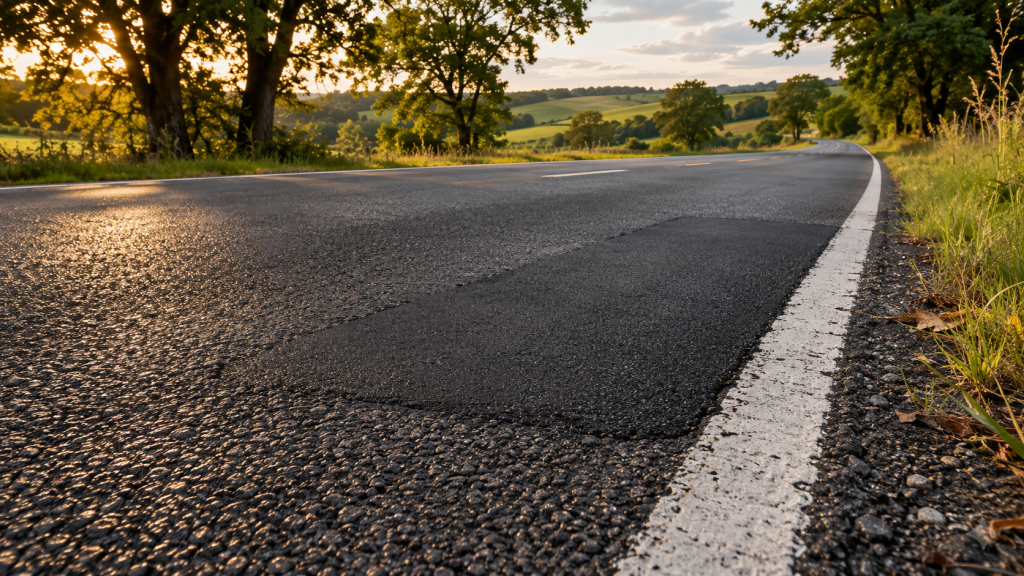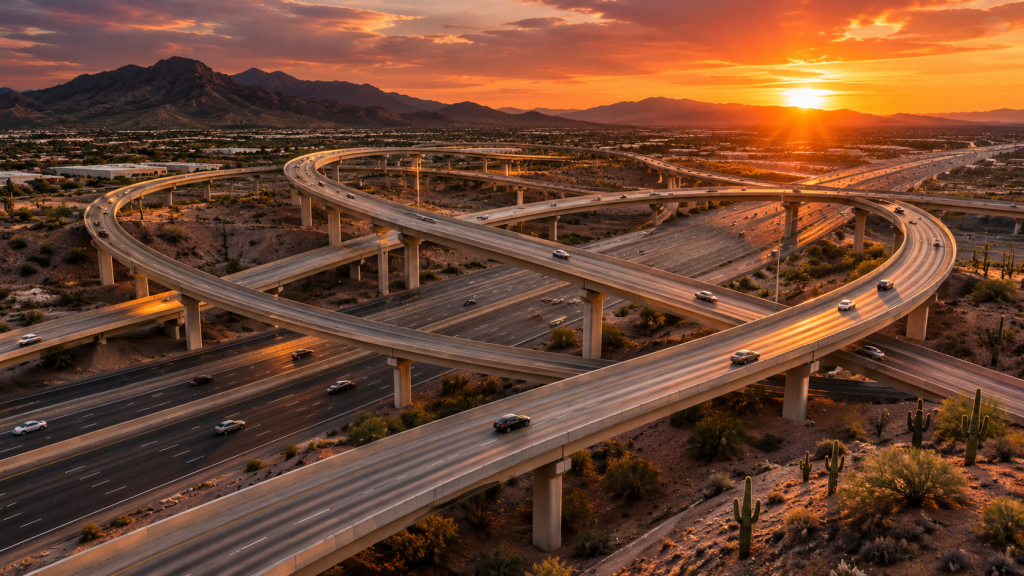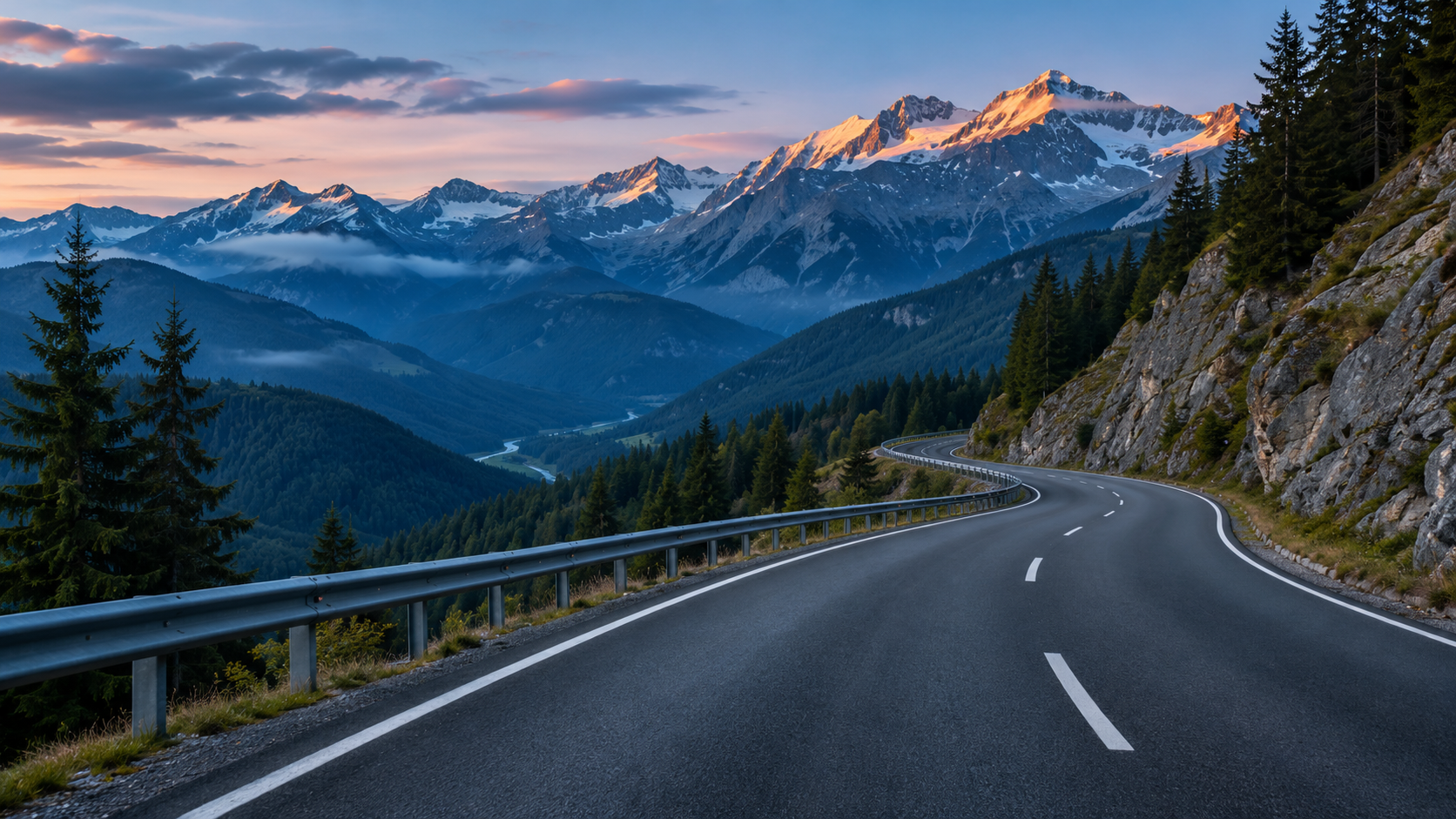
A winding road often reflects the landscape around it. Following the terrain can be more practical than cutting a straight route through every hill and valley.
Read the landscape around the road
A winding road invites a simple question: why not build it straight? The answer usually requires looking beyond the strip of pavement. Hills, valleys, waterways, existing development, and the places a route needs to connect all form part of its setting. A straight line on a map is not a complete construction plan.
Picture a road following the side of a valley. Turning with the landscape may make more sense than crossing repeatedly from one side to another. That is an illustrative way to understand alignment, not a claim about the design history of every mountain highway. The reasons for a particular route belong in that road project's planning records.
Not every curve is the same
FHWA distinguishes horizontal curves, which change a road's direction, from vertical curves, which change its slope. A road can bend across the landscape and rise or fall at the same time. A map viewed from above shows only some of that experience.
This helps explain why two sections that look similar on a navigation screen can feel different in person. What you can see ahead, the surrounding terrain, and the way the road rises into view all contribute to the impression. The curve symbol on a map cannot describe every detail.
A road also connects places
Roads are more than lines between distant endpoints. They serve neighborhoods, farms, businesses, trailheads, and other connections along the way. Looking at a route solely as a driver passing through can hide those local purposes.
When you are curious about a particular winding road, compare its surroundings with its route. Where are the settlements? Where does it cross water? Which side of a valley does it follow? These observations can suggest useful questions, though they do not replace an engineering explanation.
Appreciate curves without treating them as a challenge
A scenic route is not a test of how quickly its bends can be completed. Pay attention to posted instructions and the conditions you encounter, and save photographs for appropriate stopping places.
The next time a route takes an unexpected turn, consider what lies around it. Understanding a road begins with seeing it as part of a landscape and a network of places, not simply as the shortest distance between two points.
Sources & resources
Technical and safety references checked November 18, 2026. These general guides do not replace instructions for a specific vehicle or road.