A highway can slow dramatically even when there is no obvious crash ahead. Small changes in speed and limited space between vehicles can spread through a busy stream of traffic.
The slowdown can travel backward
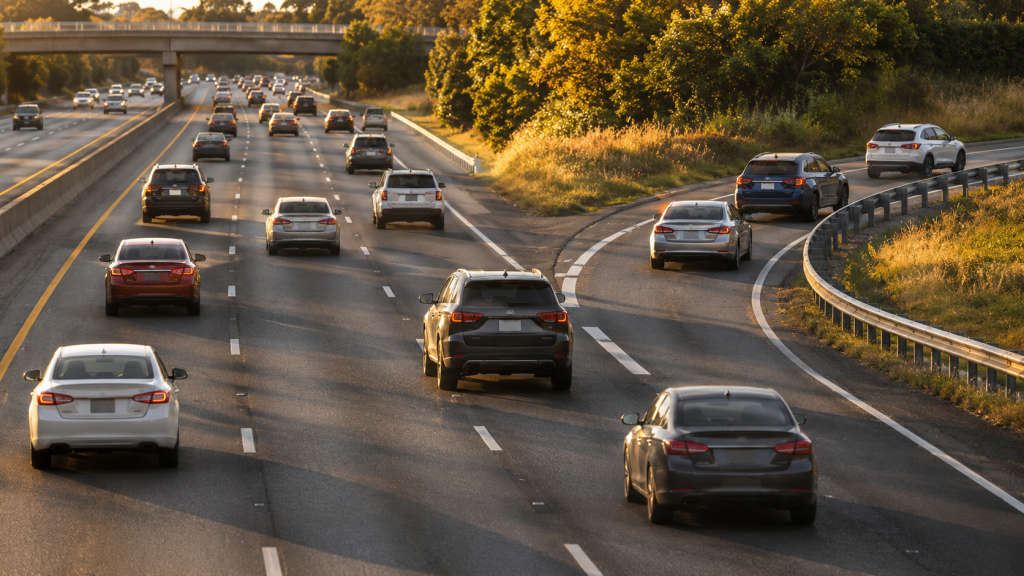
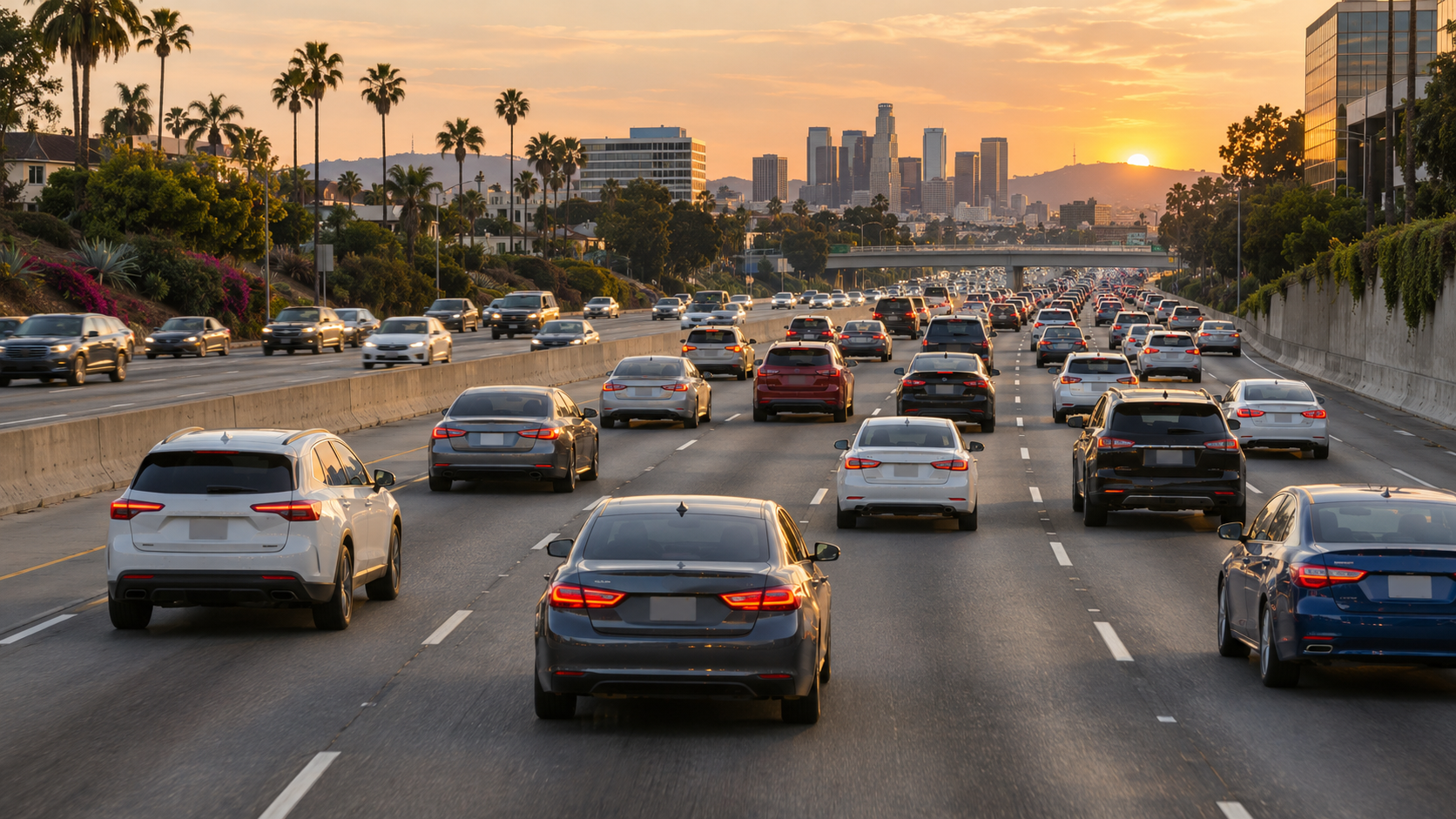
Traffic is a stream of individual vehicles whose drivers respond at different moments. FHWA describes traffic shock waves as abrupt changes in speed, density, and flow. The line of brake lights spreading backward through a queue is a visible example: the vehicles move forward, while the boundary of the slowdown can move in the opposite direction.
That distinction matters. The place where you first stop may be far from the original disruption. A driver joining the back of a queue experiences the consequence before seeing the cause, if the cause is still visible at all.
A blockage may already be gone
Imagine a temporarily blocked lane that reopens before you reach it. The vehicles accumulated behind the blockage still need to pass through. By the time you arrive at the original location, there may be nothing unusual left to see. FHWA identifies this as one reason congestion can appear to have no cause.
This is different from concluding that every unexplained queue came from an incident. It is one possible pattern. The absence of a visible crash or road crew is not enough to establish what happened earlier.
Some places repeatedly become bottlenecks
A bottleneck develops when the traffic trying to pass through a location exceeds what that location can accommodate. Lane reductions and busy interchange areas can contribute. FHWA also notes that the number of lanes is not the only influence: the shape of the road and the arrangement of ramps matter too.
For a commuter, the distinction between a recurring and an unusual delay is useful. A slowdown at the same interchange every weekday suggests a different planning problem from a one-off closure. Both cost time, but they do not necessarily have the same explanation or solution.
Give the journey a little uncertainty
A navigation estimate describes a changing situation, not an appointment the road has promised to keep. Build some flexibility into journeys where arrival time matters. If checking an updated route is necessary, do it before departure or from a suitable stopping place.
Understanding traffic waves will not make a queue disappear. It can, however, make the experience less mysterious. An apparently empty road ahead does not erase the sequence of small delays that formed behind it, and reaching the end of a queue rarely reveals the whole story.
Sources & resources
Technical and safety references checked November 18, 2026. These general guides do not replace instructions for a specific vehicle or road.