A weekend drive is easier to enjoy when routine maintenance has not been overlooked. Your vehicle handbook is the starting point for checks appropriate to the car.
Start with the handbook and recent history
A weekend drive is a useful reason to review routine care, but it is not a reason to improvise maintenance. Begin with the vehicle handbook and the work already due. A scheduled service, an unresolved warning, or a new symptom deserves attention before the trip becomes a deadline.
Make a short record of anything you want a qualified technician to assess. Describe what you notice and when it occurs rather than guessing the faulty part. A clear account of a sound or warning is more useful than a confident diagnosis based on a brief online comparison.
Check tires using the vehicle's guidance
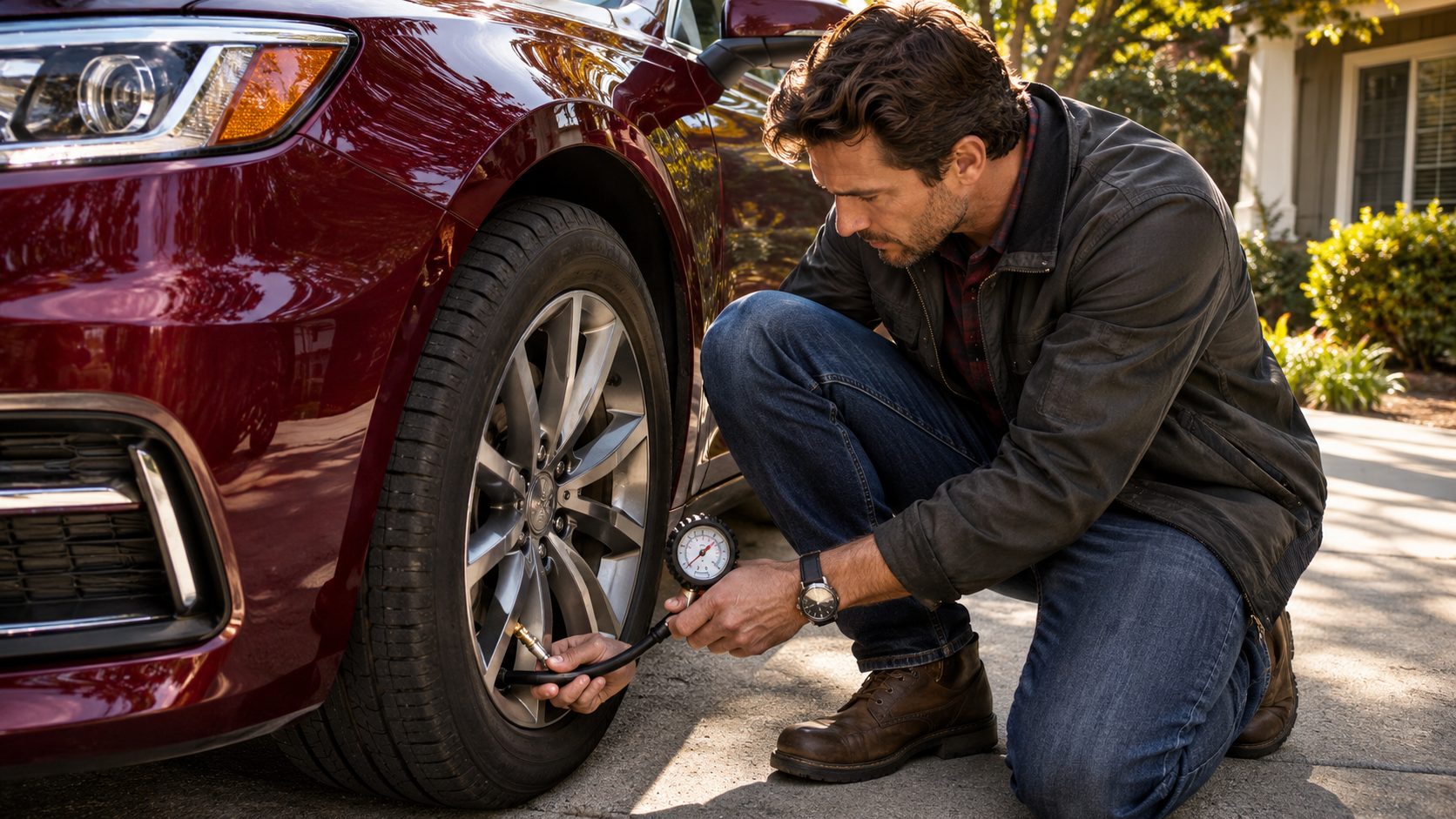
NHTSA recommends checking inflation with a gauge and using the pressure specified for the vehicle, rather than the maximum marked on the tire. Tire-pressure monitoring does not replace regular checks. Inspect for visible damage and wear, and obtain professional advice if something looks wrong.
The handbook is also the place to understand what equipment the vehicle carries for a tire problem. Do not assume there is a spare wheel or that equipment from a previous car is suitable. Familiarize yourself with the actual arrangement while parked and unhurried.
Review visibility and everyday equipment
NHTSA's trip-preparation guidance includes lights, wipers, fluid levels, and other basic checks. Follow the manufacturer's procedures and use professional help where needed. A quick look before leaving is not equivalent to a mechanical inspection.
Include the cabin in your preparation. Clear away loose clutter, make sure the controls you need are accessible, and organize luggage before departure. This is a chance to notice small practical problems that are easy to ignore during a familiar commute.
Know when to postpone
A checklist is useful because it can reveal reasons to change the plan. If a warning appears or a problem remains unexplained, do not let a booked lunch or scenic destination decide whether the vehicle is ready. Arrange appropriate assessment and reconsider the journey.
Keep the preparation proportionate and repeatable. A simple routine you understand is more useful than a long list copied without knowing which steps apply to your car. The goal is to begin the weekend with routine care addressed, clear information available, and fewer unresolved questions about the vehicle beneath you.
Sources & resources
Technical and safety references checked November 18, 2026. These general guides do not replace instructions for a specific vehicle or road.