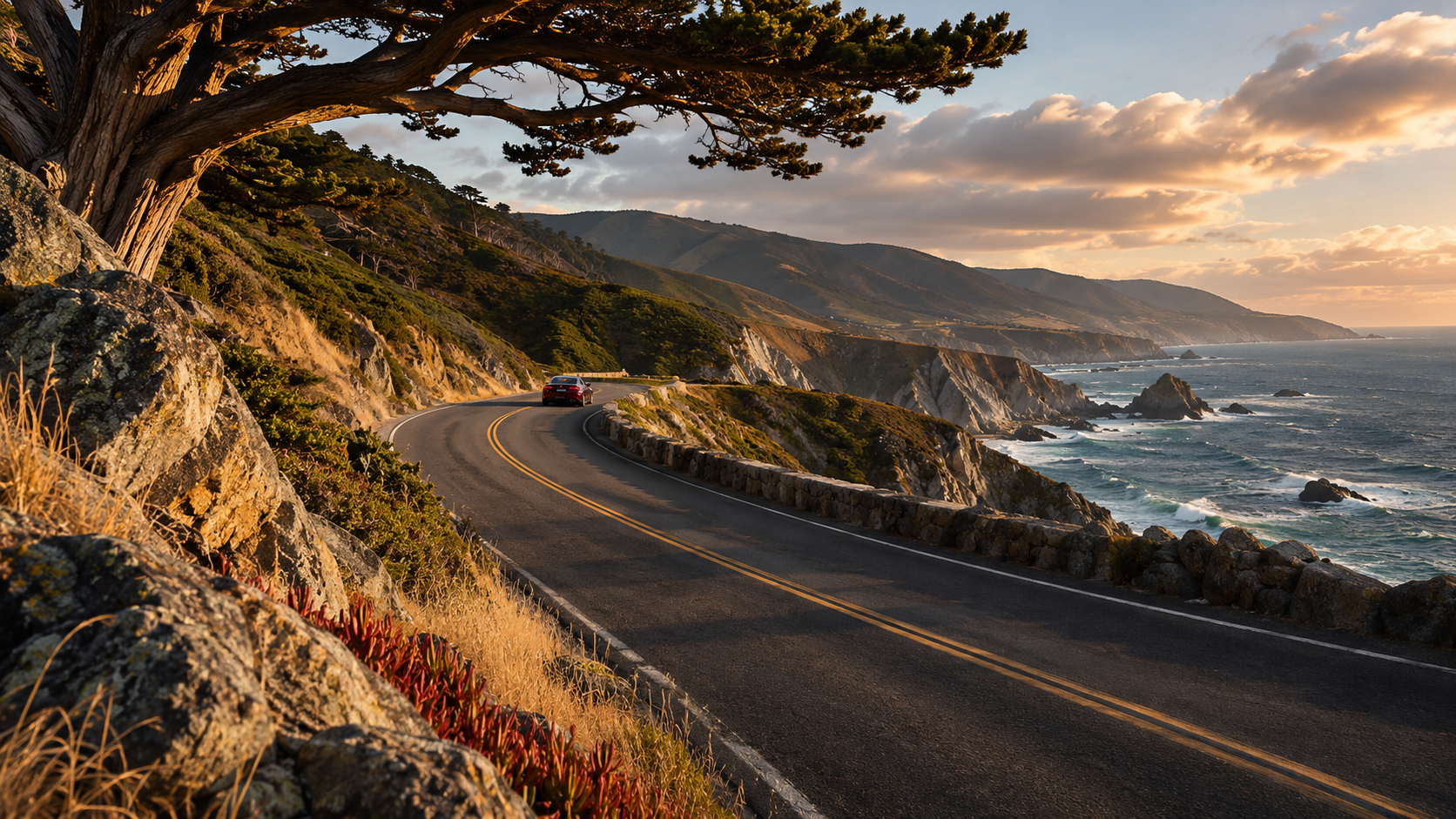
A scenic road trip works best when the journey has room to breathe. Choose a manageable route, leave time between planned stops, and treat the drive as part of the experience rather than a gap between destinations.
It is tempting to build an itinerary around everything you could see. A mountain viewpoint, a coastal town, a small museum, and a favorite lunch spot can all look close together on a map. Add parking, walking, meals, and the drive itself, and that relaxed day starts to feel like a race.
Pick one experience you would be happy to build the day around. Let everything else stay flexible.
Choose the experience,
then the destination
Start with how you want the day to feel. Do you want long stretches of open scenery, a series of small-town stops, or an afternoon beside the water? That answer is more useful than collecting a long list of places simply because they are nearby.
Discuss the idea with everyone traveling. Someone hoping to photograph landscapes may want time at a single viewpoint. Someone interested in local food might prefer a shorter drive with a longer lunch. A shared expectation helps make the route enjoyable for everyone.
Choose one main stop and a small number of optional ones. An optional stop should be easy to skip without making the day feel incomplete.
Build a lighter route
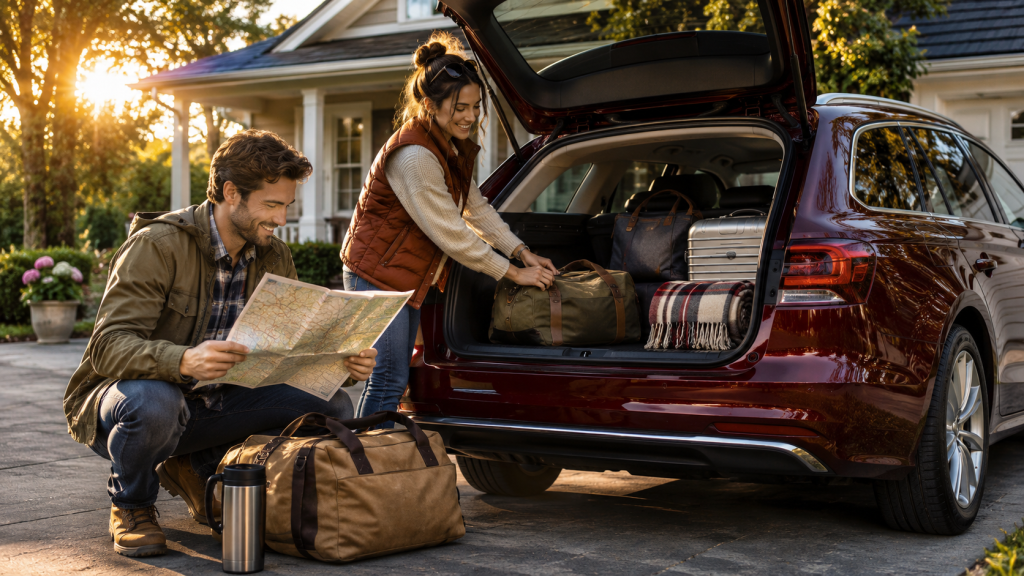
Look at the whole journey, including the return leg. A route that feels comfortable in the morning may feel very different after a full day of exploring. Consider whether a loop, a simple out-and-back drive, or an overnight stay best matches the time available.
Use a navigation estimate as a starting point, then add space for the things it does not represent: finding parking, walking to a viewpoint, ordering lunch, and deciding where to go next. Avoid making each stop depend on arriving at the exact minute shown on your map.
Keep a shorter alternative in mind. If the day takes longer than expected, you can finish with a satisfying route instead of trying to catch up with a schedule.
Plan the shape of the day.
Leave the details some breathing room.
Make space for the stops
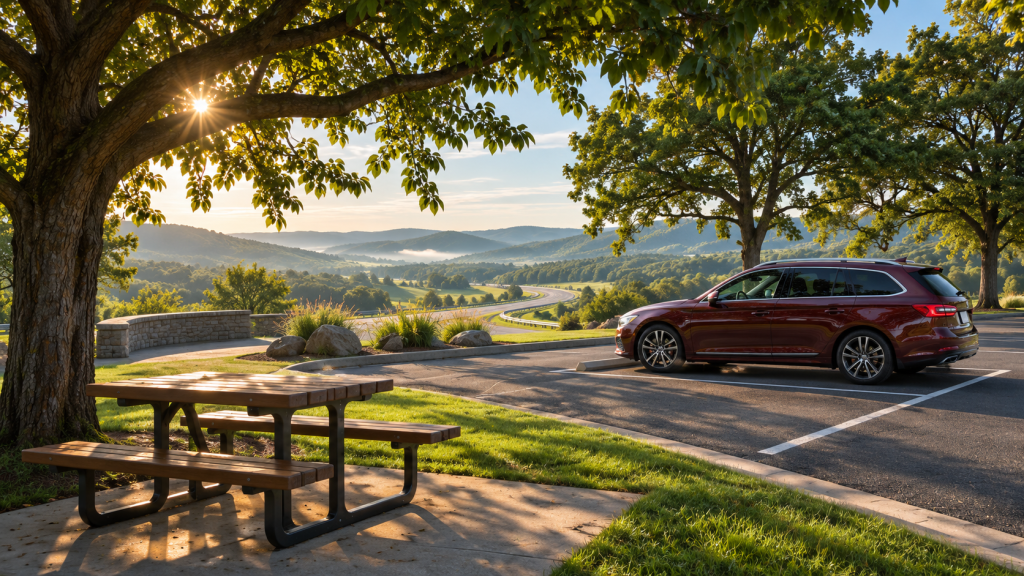
A scenic drive is more than a sequence of views through the windshield. Leave time to step out at an appropriate stopping place, stretch, and enjoy the surroundings without immediately checking the clock.
Think about what each stop asks of your group. A viewpoint beside a parking area and a longer walk to an overlook are different experiences. Check access information before including a place, particularly if someone needs step-free facilities or a shorter walking distance.
Meals deserve their own space in the day. Choose a broad window for lunch and keep an alternative in mind. A busy restaurant does not need to determine the pace of the entire trip.
Find your daily rhythm
Give the day a few loose anchors rather than a timetable for every hour. You might aim to reach the main stop before lunch, spend the afternoon exploring nearby, and begin the return journey with time to spare.
Leave room for different interests. One traveler may enjoy a quiet pause while another takes photographs. A little unstructured time can make the trip feel more personal without adding another destination.
If you are staying overnight, resist the urge to turn every day into a transfer between places. Spending longer in one area can offer a different kind of variety: a new road, a different walking route, or a second visit to a place you enjoyed.
A simple planning checklist
Before leaving, bring the plan down to a few useful decisions. The goal is to reduce small uncertainties so you can give more attention to the experience.
- Choose one main experience and mark the other stops as optional.
- Review the full route, including the return journey.
- Check access, opening hours, and current route information.
- Allow time for parking, meals, and comfortable breaks.
- Save the details you may need when reception is limited.
- Agree on a shorter alternative if the day runs long.
A plan does not need to be elaborate to be useful. A short note with your main stop, a few alternatives, and the route back may be all you need to keep the day organized.
Leave something for next time
You do not have to see everything on one trip. Passing an interesting turn or leaving a town before exploring every street can become the beginning of another journey.
Afterward, note what worked: the amount of driving, the balance of stops, and the moments when the day felt most relaxed. Those details make the next route easier to plan than a checklist of places you managed to visit.
The most memorable part of a road trip may be a stop that never appeared in the original itinerary. Give yourself enough time to notice it.