When several vehicles become involved in a collision, the scene can change quickly. Traffic speed, limited visibility, and the movement of nearby vehicles all matter.
A collision changes the road around it
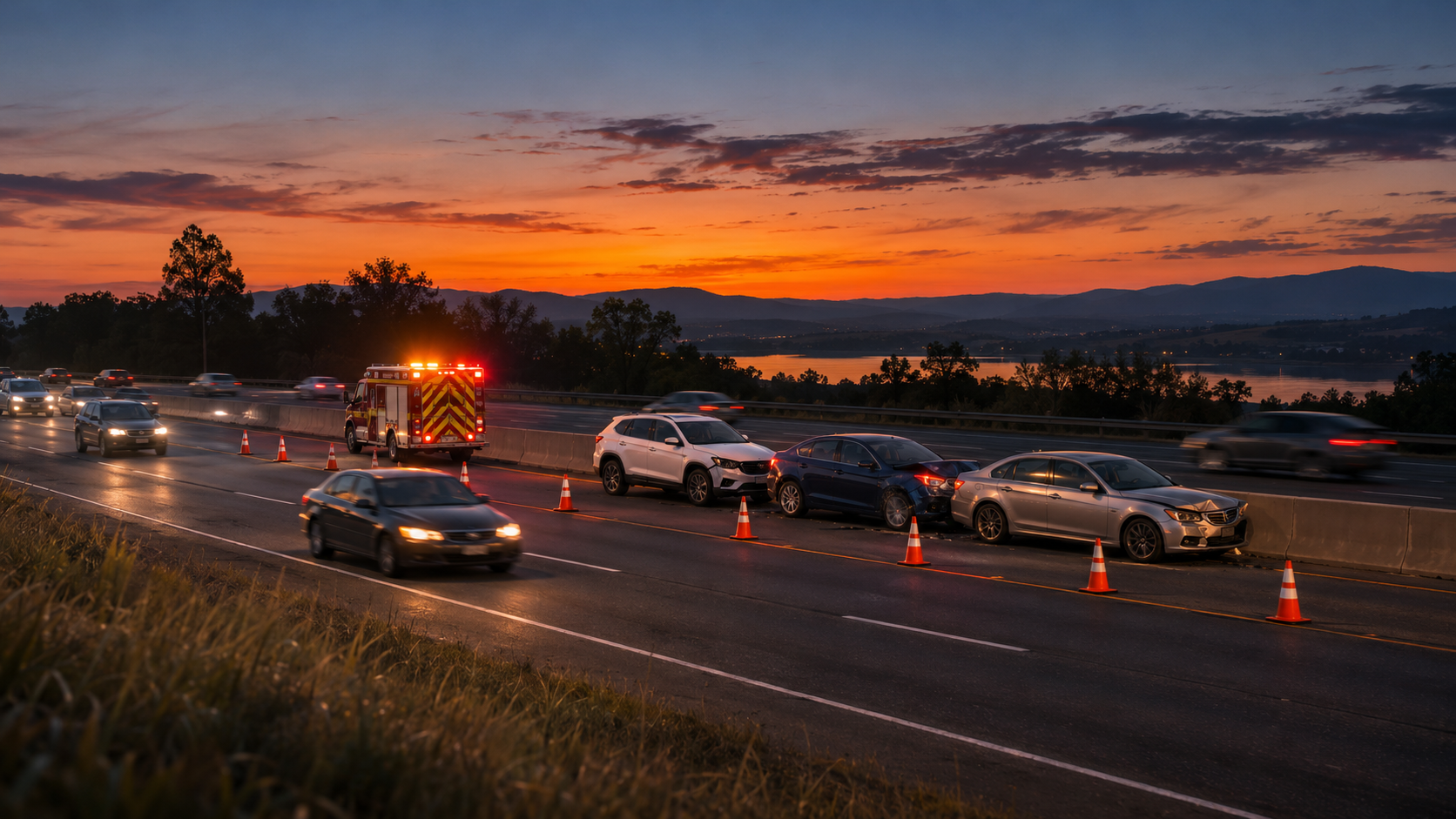
A highway collision is not confined to the damaged vehicles. It changes the conditions that approaching drivers encounter: a lane may be obstructed, traffic may slow, and emergency personnel may need room to work. When several vehicles are involved, the layout can become harder to understand from a distance.
This article explains general risks. It does not describe a particular incident or establish who was responsible for one. The number of vehicles alone cannot tell us the sequence of impacts, the injuries sustained, or the actions of individual drivers.
The end of the queue is another hazard
FHWA identifies both the incident scene and the back of the resulting queue as important traffic-control locations. Drivers farther upstream may reach suddenly slowing traffic without being able to see the collision. A secondary crash can therefore occur away from the original scene.
That is one reason an incident should not be thought of as a single fixed point. As traffic accumulates, its effects extend beyond the location shown by a map pin. Conditions can change while responders work and while additional vehicles approach.
Speed and available space matter
NHTSA explains that speed increases the distance needed to stop after a driver recognizes a hazard. A situation that develops quickly leaves less margin when vehicles approach too fast for the conditions. The posted limit does not eliminate the need to account for weather, visibility, and the road ahead.
For a reader trying to understand an incident report, keep those general principles separate from findings about an actual crash. A photograph of closely spaced vehicles is not a measurement of their earlier speed or following distance. Specific conclusions require evidence from the event.
Give the scene your attention, not your camera
The task for a passing driver is to follow traffic controls and responder directions while staying attentive to the road. Trying to photograph an incident introduces another competing task at a place that already demands care. Keep room for the people managing the scene.
If you are involved in an emergency, contact emergency services when you can safely do so and follow their instructions. The appropriate action depends on hazards such as live traffic, fire, and the position of the vehicle; a general article cannot assess those circumstances remotely. Understanding the wider scene is useful, but it never replaces instructions from responders dealing with the actual event.
Sources & resources
Technical and safety references checked November 18, 2026. These general guides do not replace instructions for a specific vehicle or road.